
MULTI-SIDED PLATFORM · TALENT SEARCH · B2B SAAS
Khibra: Fixing Early-Career Hiring for Students, Employers, and Universities
Solving the GCC's early-career hiring crisis: Building the two-way visibility infrastructure that connected 900+ students with 200+ employers - validated by $500K funding and a competitive acquisition.
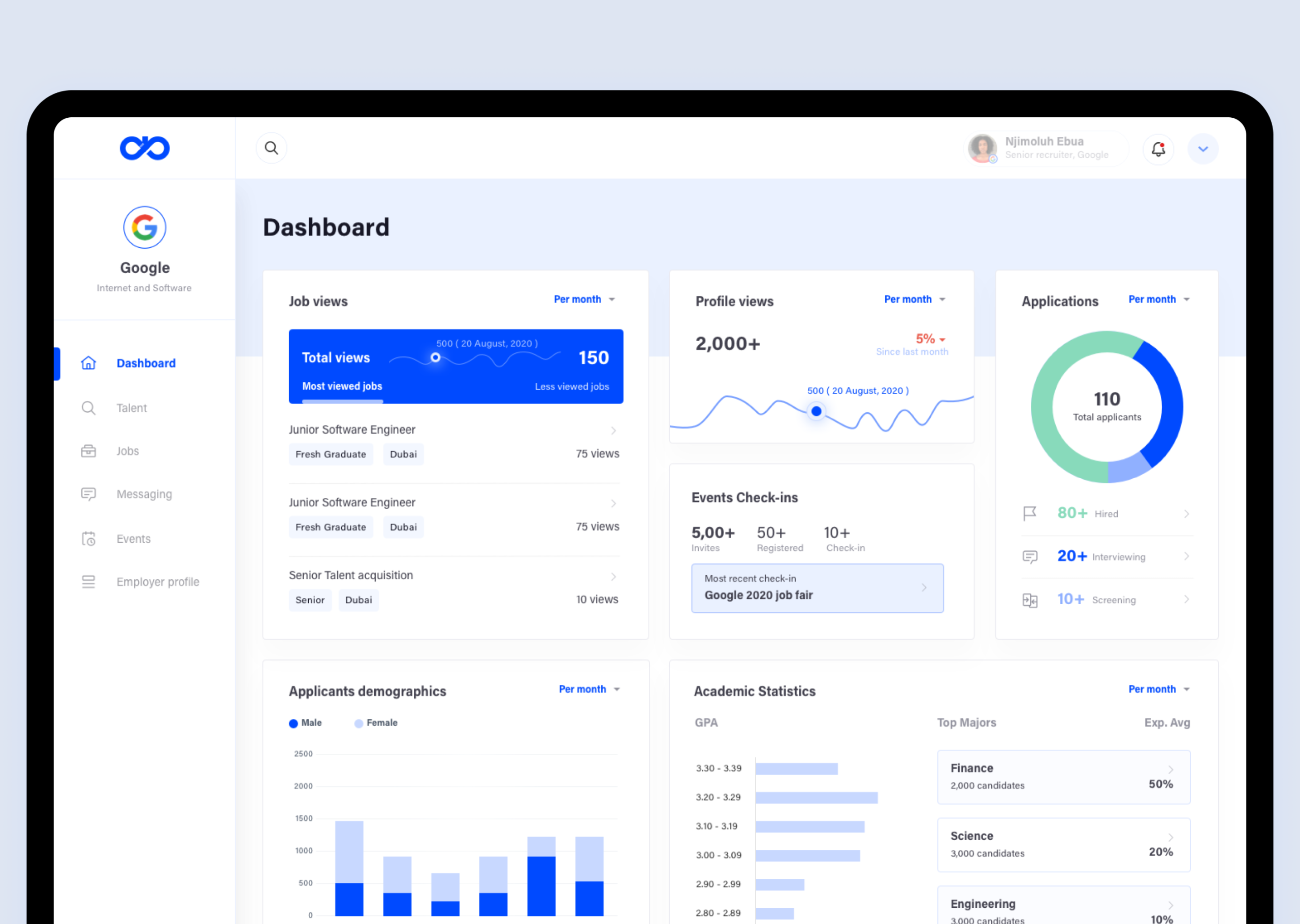
Overview
As the founding design lead at Khibra, built inside The Taken Seat venture builder, I worked on the product from early discovery through launch and scale.
My role focused on defining the core structures the platform needed to function, including the CV data model, search logic, and shared workflows across students, employers, and universities.
The platform grew to 900+ students, 200+ employers, and 50+ universities, secured $500K in seed funding, and was later acquired by competitor Majra.
The Problem
Early-career hiring in the GCC ran on one-way visibility.
Students applied to jobs, but employers couldn’t search or compare candidates, and universities had no reliable outcome data. Everyone worked in isolation, using CVs, inboxes, and spreadsheets. This wasn’t a UI problem. It was a data problem.
Government research (EY, Public Authority for Manpower) showed the scale of the gap:
- 23,000+ nationals entered the workforce each year
- Only 4,600 joined the private sector
- 60%+ lacked basic career information
Without structured profiles and shared data, employers defaulted to intuition, universities lost continuity when staff changed, and students had no feedback loop.
No one could make informed decisions.
In practice, employers couldn’t tell which part of the graduate talent pool was actually applying.
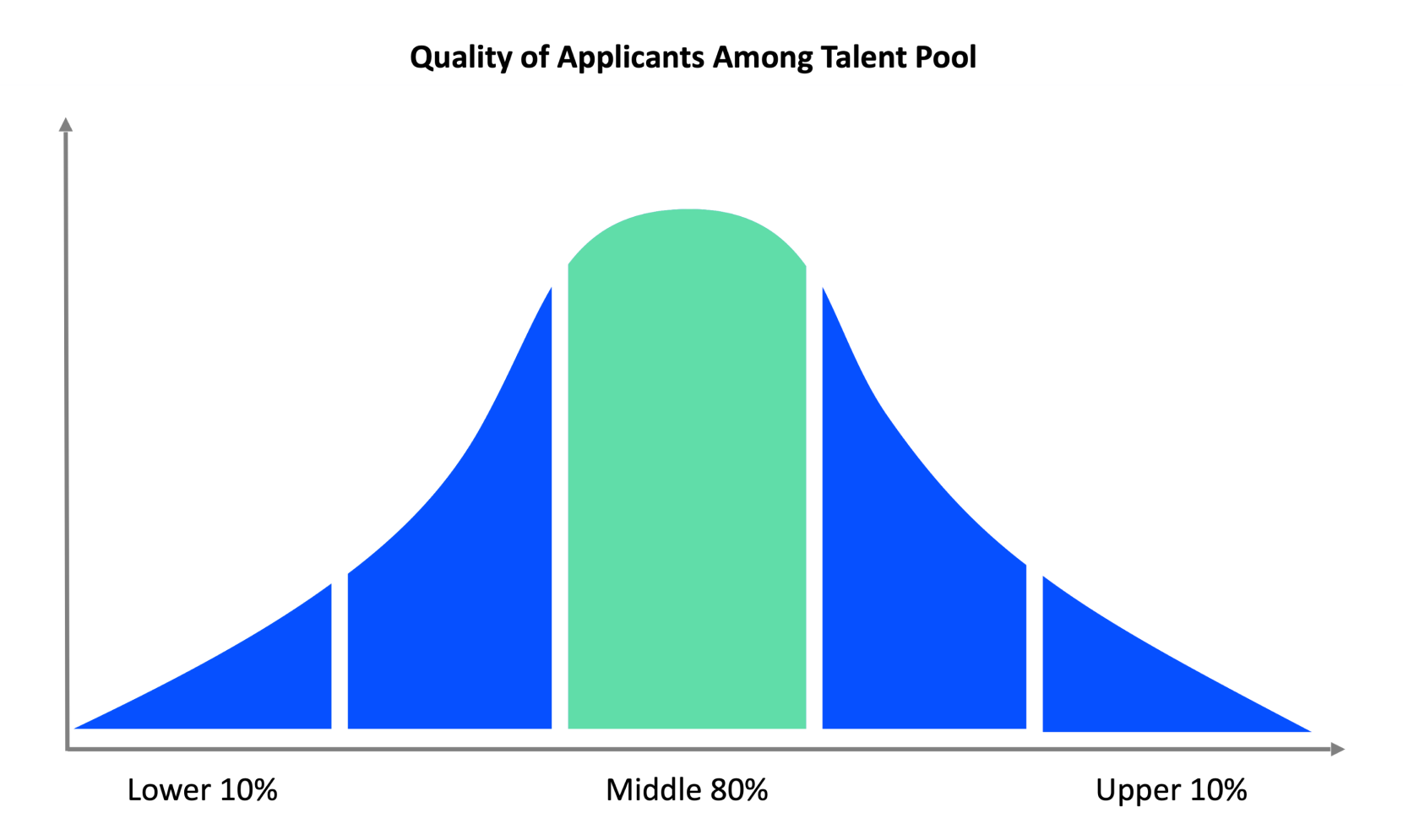
Most employers only saw the extremes, while the majority of candidates sat in the middle, largely unseen.
My Role
For the first six months, I was the only designer on the team. My job was to put the basic structure in place so the product could actually work and scale later.
That meant figuring out how CV data should be structured, how employers would search and compare candidates, and how universities would manage events and track outcomes. Once those foundations were right, the rest of the product became much easier to build without rework.
What I worked on:
- Defined how student CVs were structured so profiles could be searched and compared
- Designed the main product areas: CV builder, student dashboard, employer search, and university events
- Set up a shared component system so the product stayed consistent as the team grew
- Ran interviews and testing sessions with students, employers, and university teams
- Worked closely with engineering and product to make trade-offs and keep scope realistic
Duration
2+ years
Tools
Sketch (Early phase)
Figma
Jira
Confluence
Team
Lead Product Designer (me)
1 Supporting Designer
1 Product Manager
1 Technical Lead
3 Engineers (Android, iOS and Backend)
Venture Builder Leadership
Phase 1: Design and Validation
1.1 Initial User Research
To understand where the hiring process was breaking down, I interviewed 22 students, 8 employers, and 6 university career teams. These conversations validated what market studies (EY, PAM) had already highlighted: students lacked guidance, employers lacked visibility, and universities lacked structure.
What we found
82%
Students wanted clearer guidance and examples of “what a good CV looks like”
2+ hours
Average time employers spent screening inconsistent PDF/Word CVs
100%
Universities relied on Excel, shared inboxes, and manual attendance tracking
60%+
Young nationals lacked basic career information (confirmed by EY/PAM research)
“I just Googled how to make a CV and copied whatever came up.”
- Student
“When staff leave, our employer relationships leave with them.”
- University career manager
“I’m sure there are good candidates here, but I honestly can’t tell who’s who.”
- HR manager
Based on these findings…
I mapped core use cases for all three groups and outlined a focused design sprint to build and validate the first MVP.
As a student...
🔹 Structured CV creation
They needed a guided way to turn fragmented documents into a clean, structured CV.
🔹 Visibility into opportunities
Students asked for relevant recommendations instead of generic listings.
As an employer...
🔹 Faster screening
Teams needed a way to filter and compare candidates quickly.
🔹 Consistent data
Every profile needed to follow the same structure to solve the “middle 80 percent” problem.
As a university...
🔹 Event management
They needed a simple process for creating events and tracking attendance.
🔹 Outcome visibility
Career teams wanted to show leadership how students were progressing.
1.2 Design
With the needs for each group clear, I moved into flows and early screens for the first MVP.
Students – CV builder and dashboard
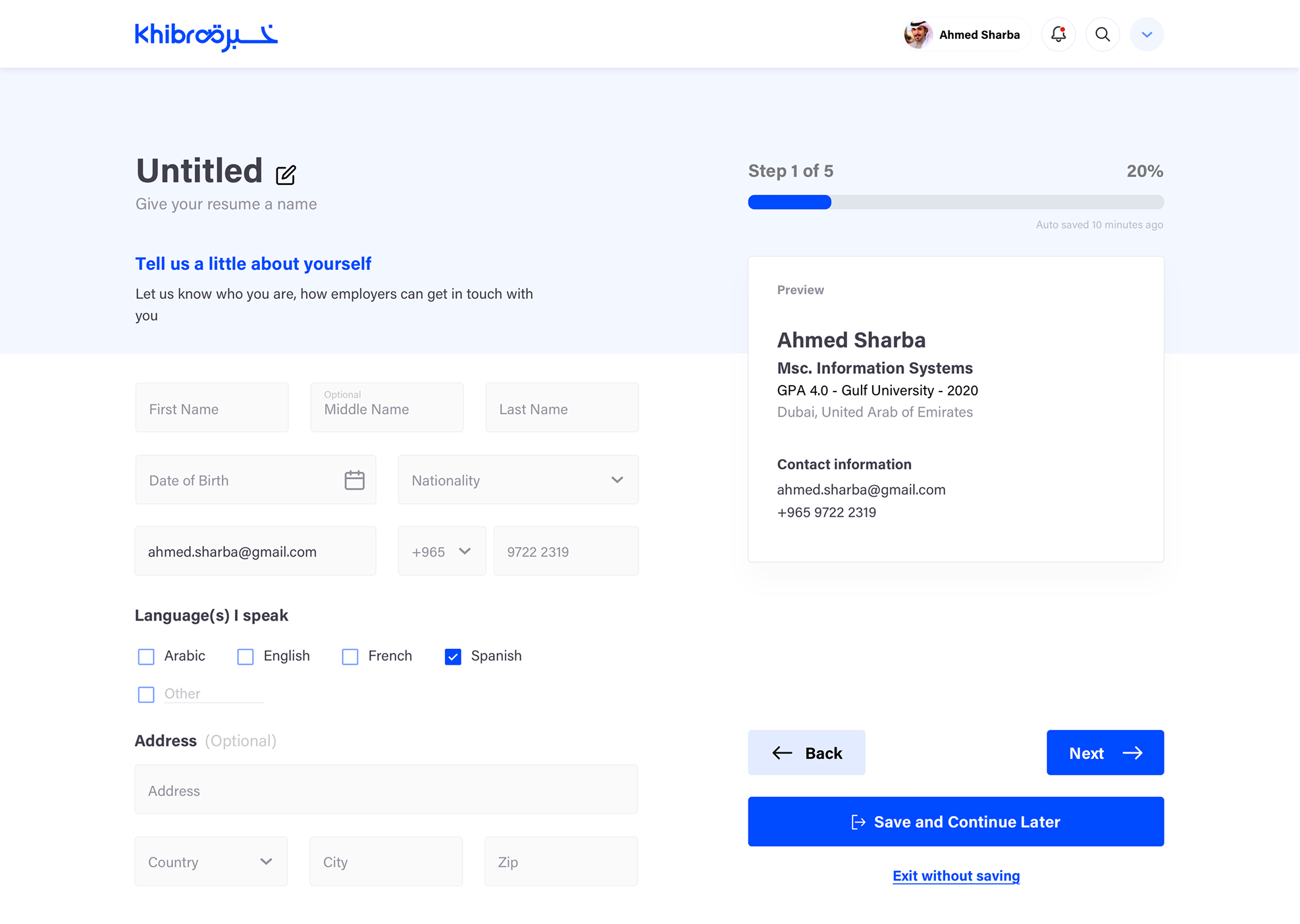
- A guided CV builder so students could create a structured CV without guesswork.
- A live preview to show how their CV was shaping up as they filled it.
- A simple dashboard to show profile strength, suggested opportunities, and upcoming events.
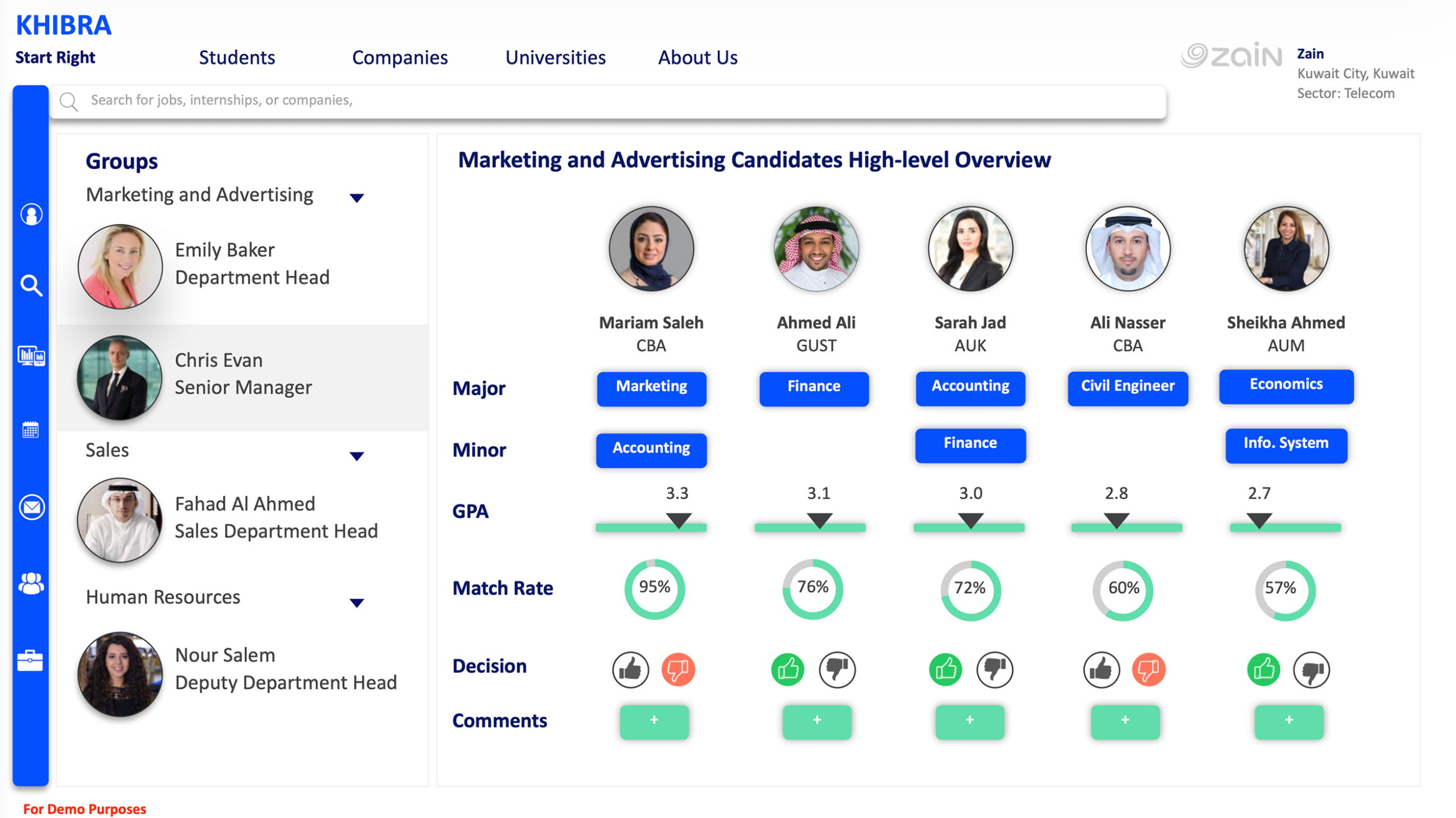
Employers – search and shortlisting
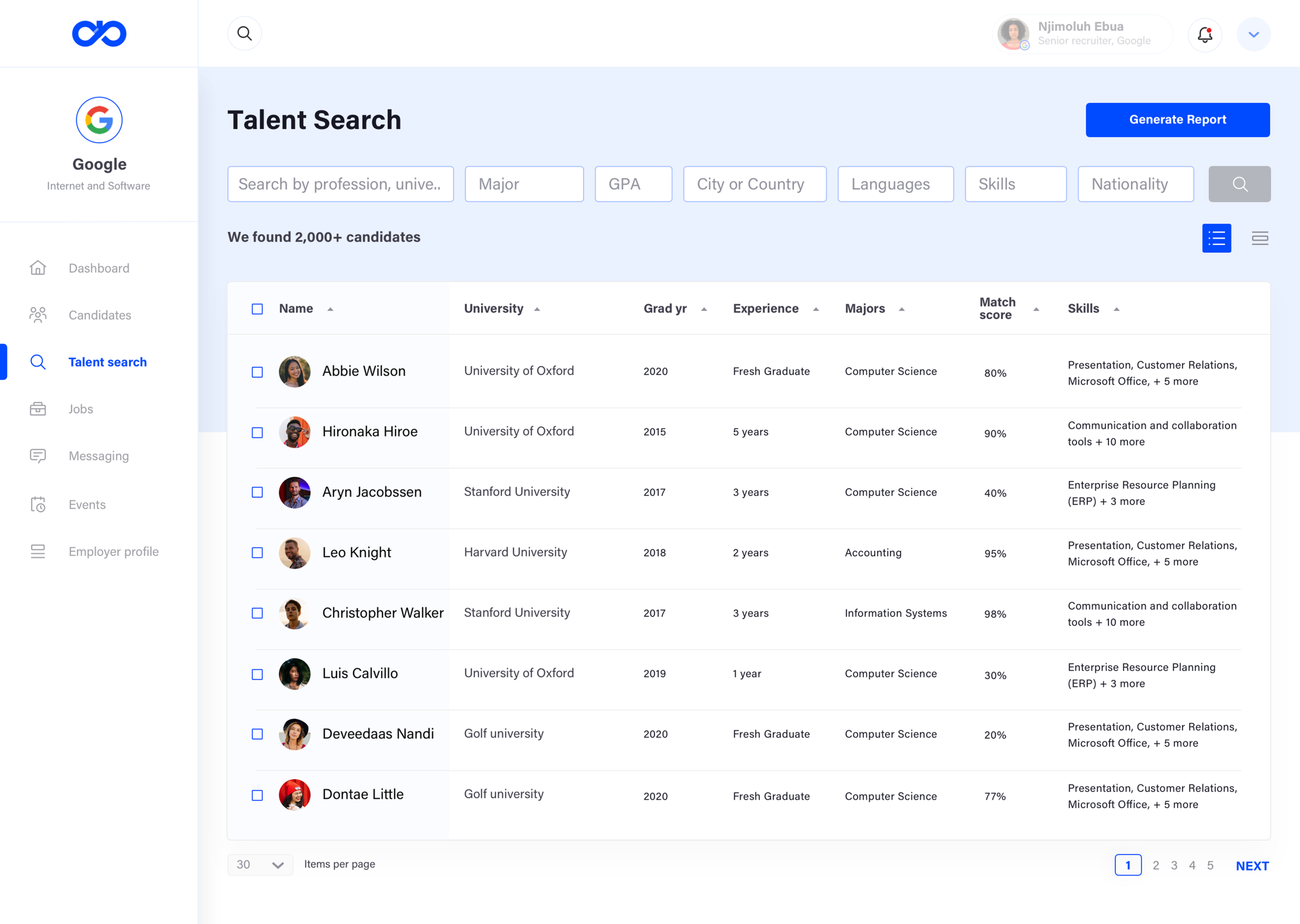
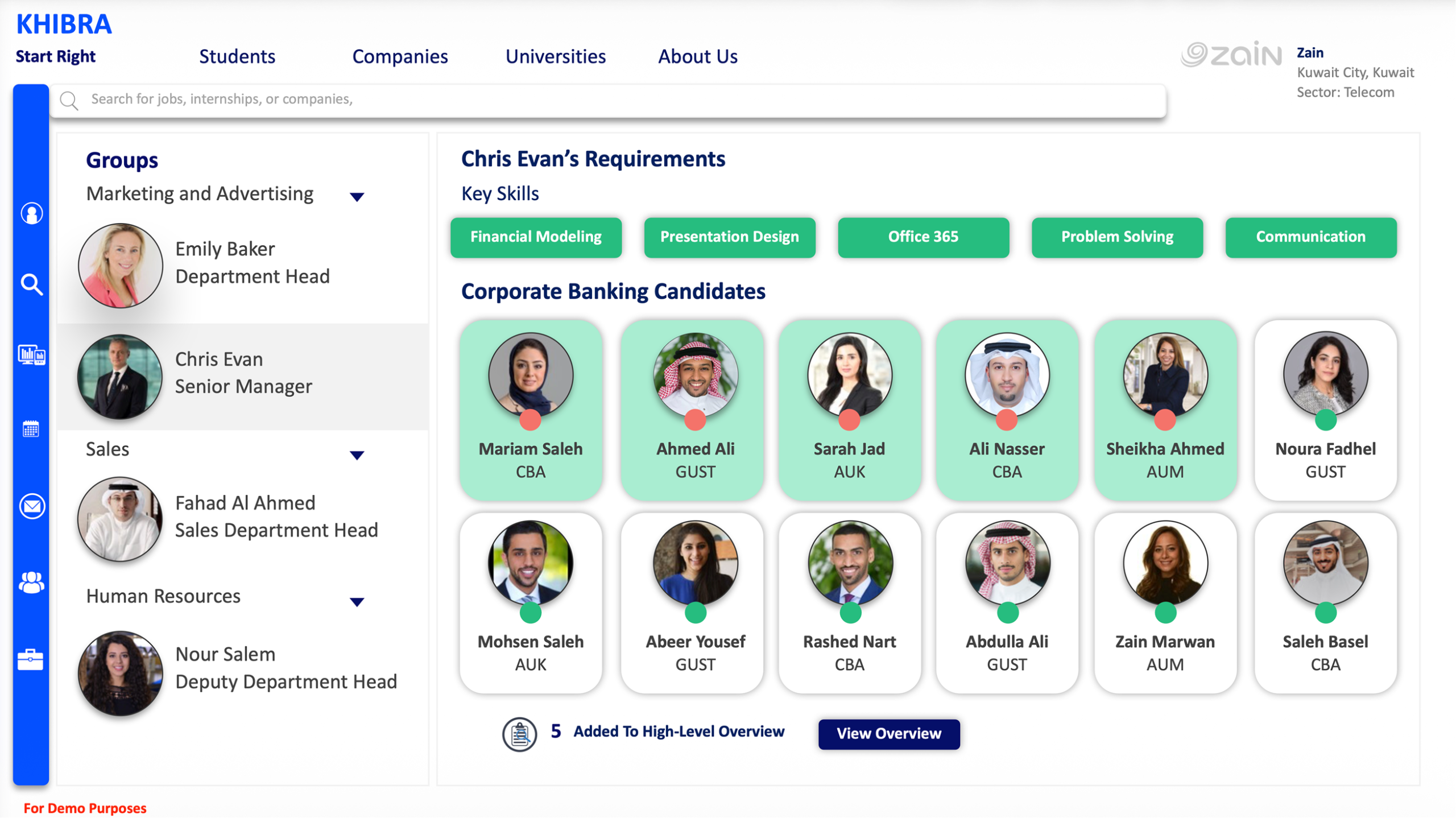
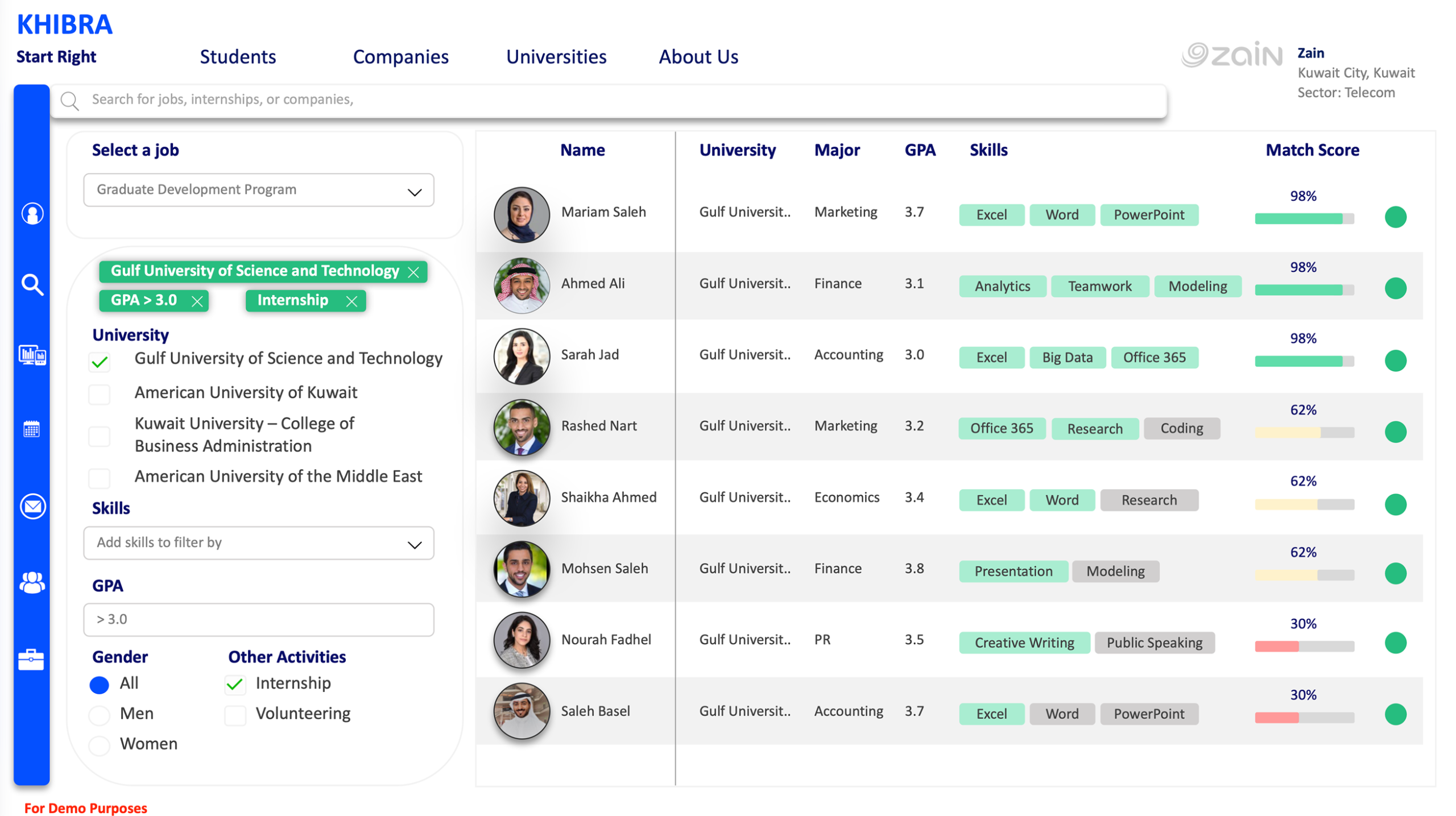
- A structured candidate list so teams could compare applicants quickly.
- Filters and a quick-compare view to cut through the “middle 80 percent.”
- Clear markers for new, shortlisted, and contacted candidates.
Universities – events and tracking
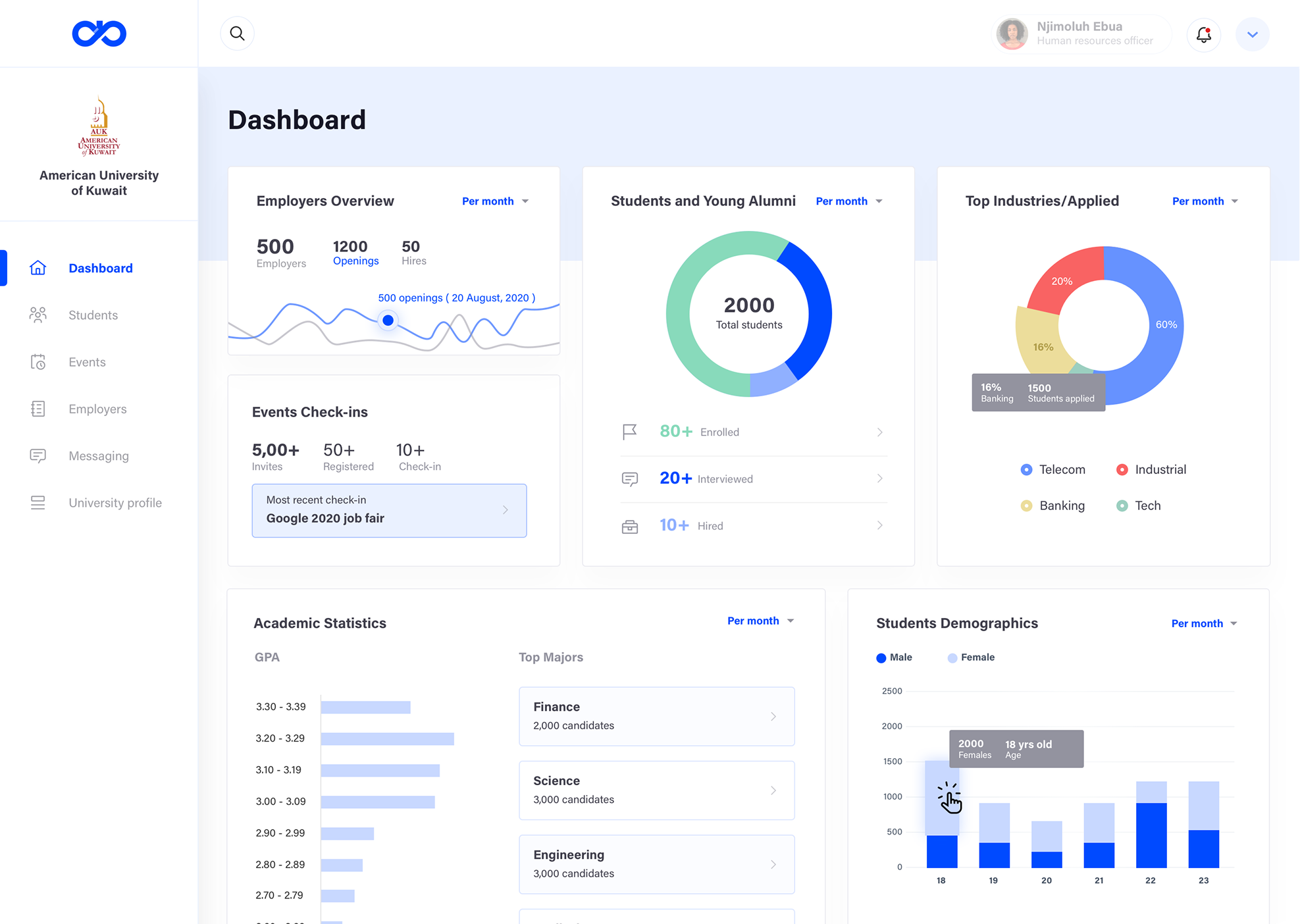
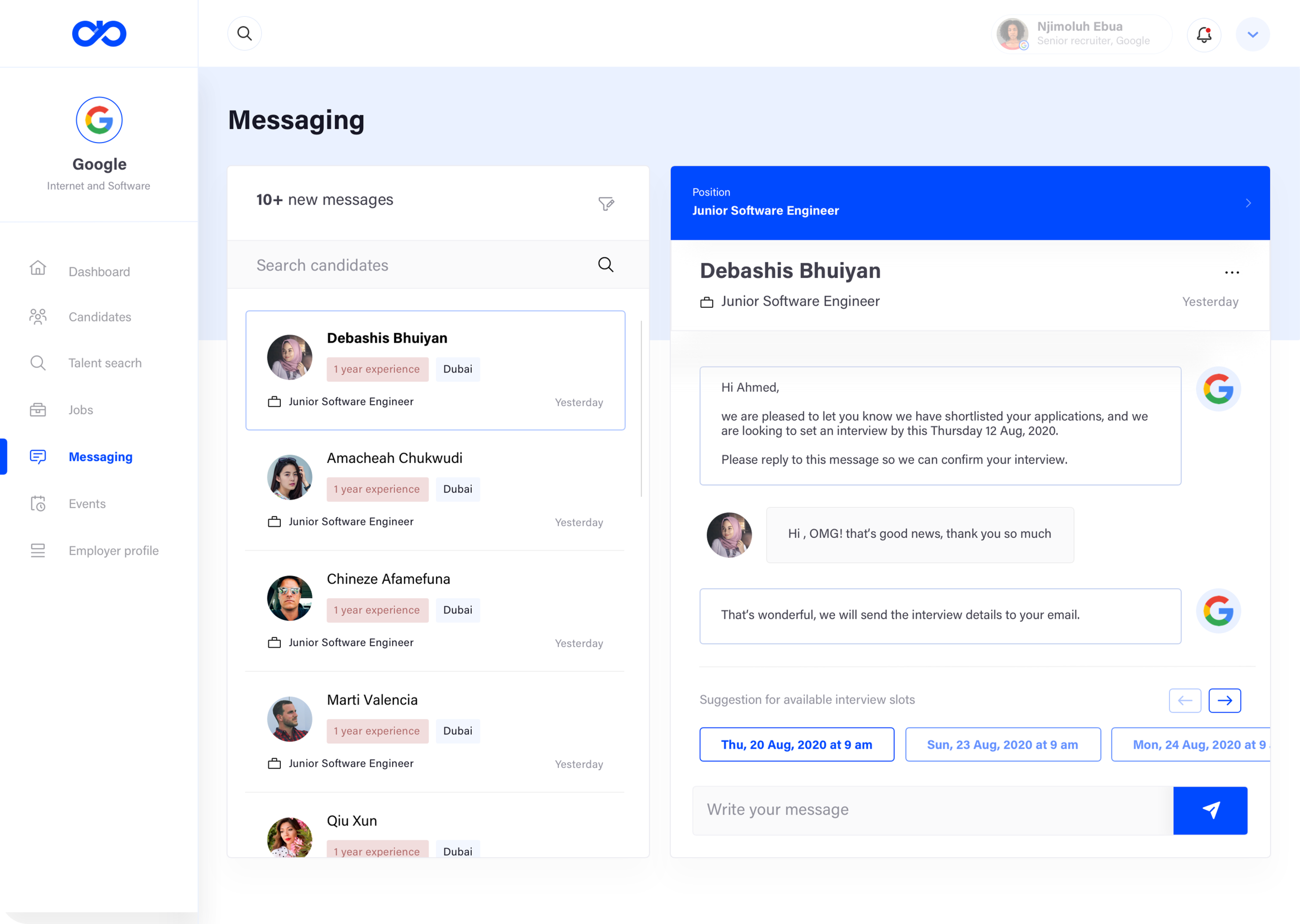
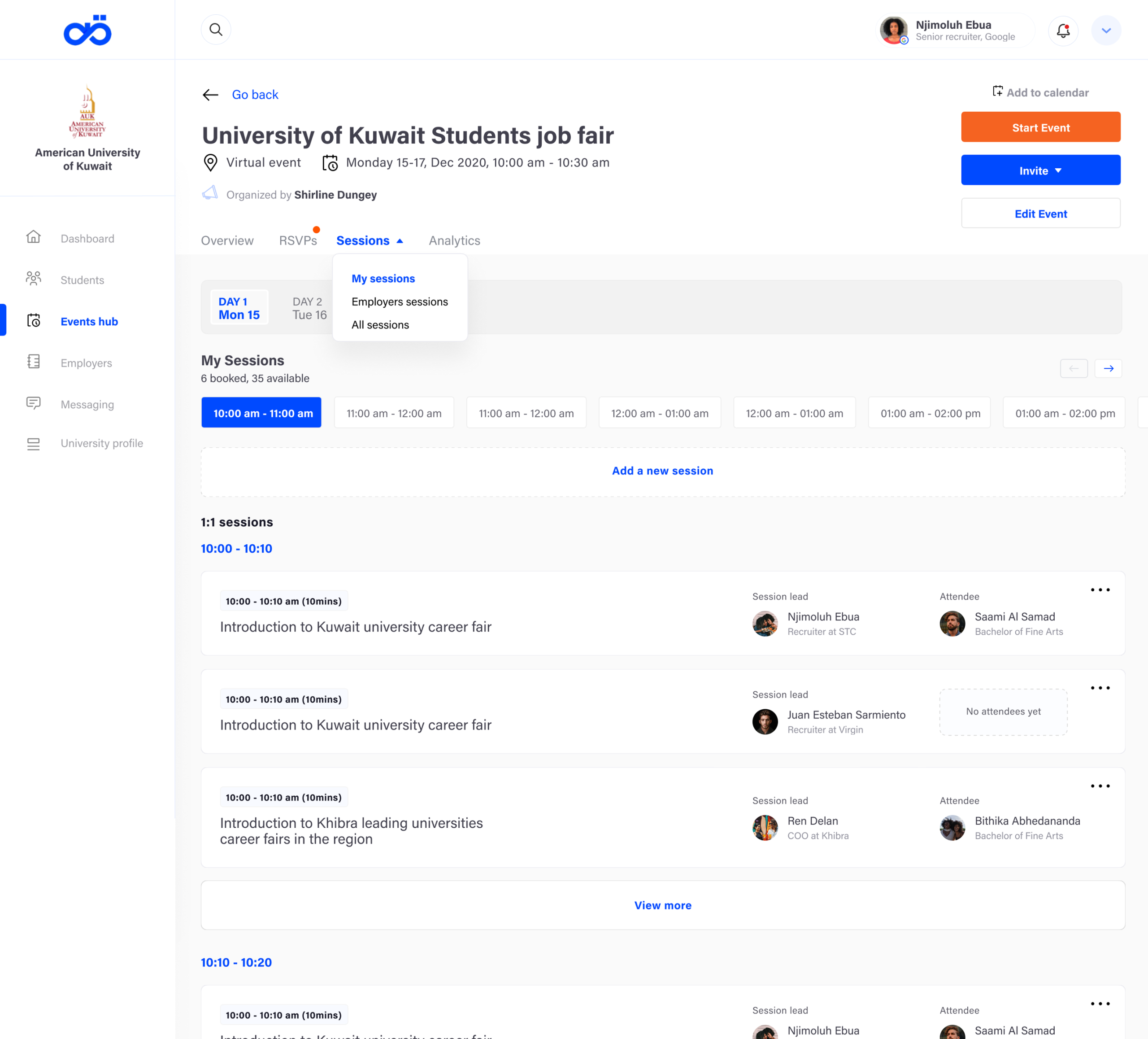
- A lightweight way to create and run career fairs, info sessions, and workshops.
- Attendance tracking tied back to student profiles.
- A simple view for leadership to understand engagement trends.
Preliminary mockups
1.3 Testing Results
I tested the early prototypes with 22 students, 8 employers, and 6 university career teams. The goal was to validate flow clarity, identify friction points, and understand whether the structured approach actually solved the problems we uncovered. 36 people were interviewed across students, employers, and universities. Of those, 20 participated in moderated prototype testing where completion was measured.
What we observed
- Students moved through the product faster than employers and universities
- Students struggled with the one-page CV builder, saying it felt long and hard to complete without guidance
- Students reacted positively to the real-time CV preview
- Employers struggled with the early compare view
- Universities completed event setup, but the steps felt heavier than needed
User response
The overall sentiment across all groups was encouraging, and most participants said the product felt “new” for the region.
20%
Total participants
82%
Student task-completion rate (students completed the CV flow with minimal help, despite the friction in the one-page format)
61%
Employer task-completion rate (struggles around shortlist compare view)
84%
Positive feedback (across all groups)
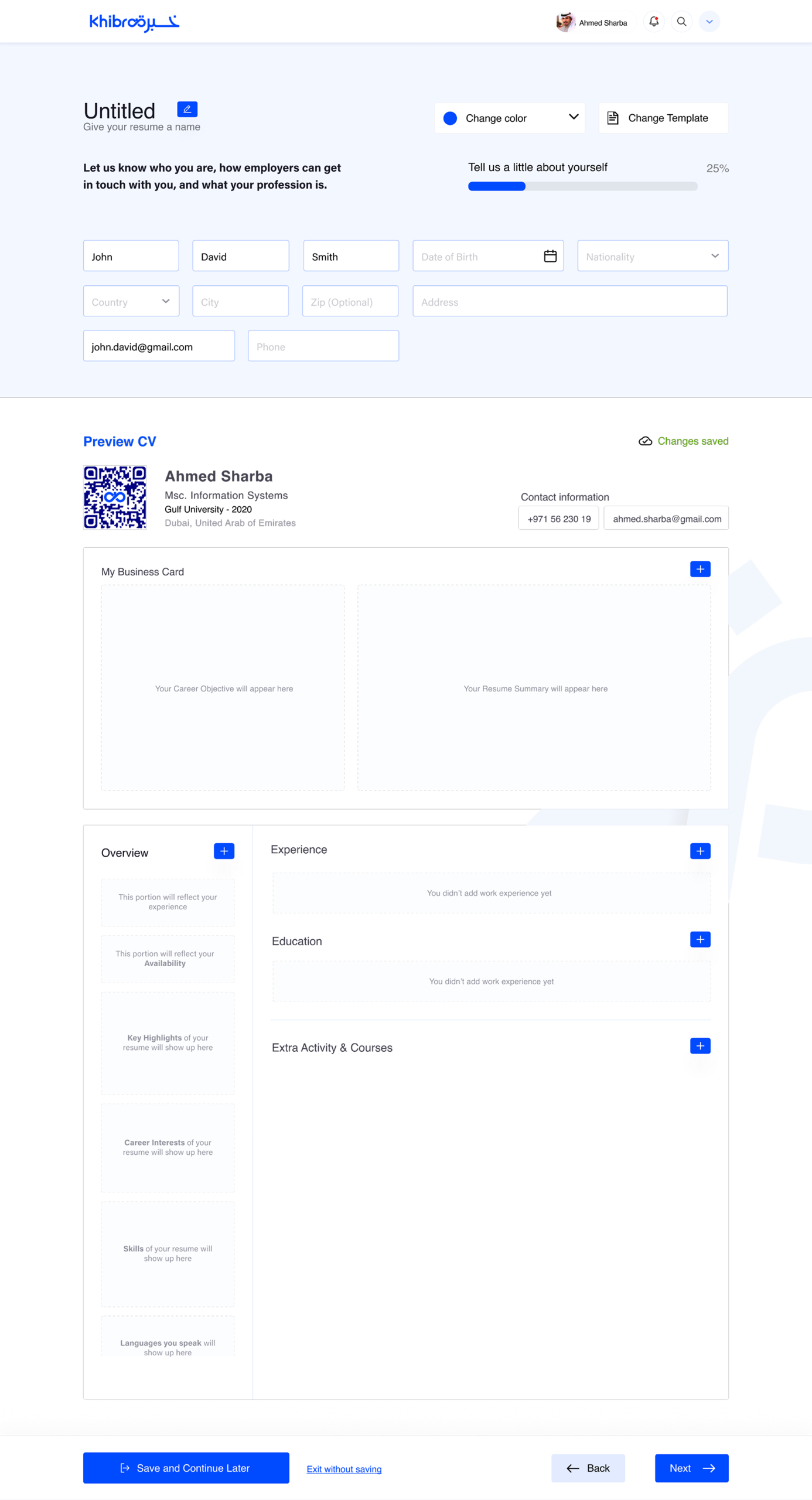
MVP Version (Unguided One-Page Flow)
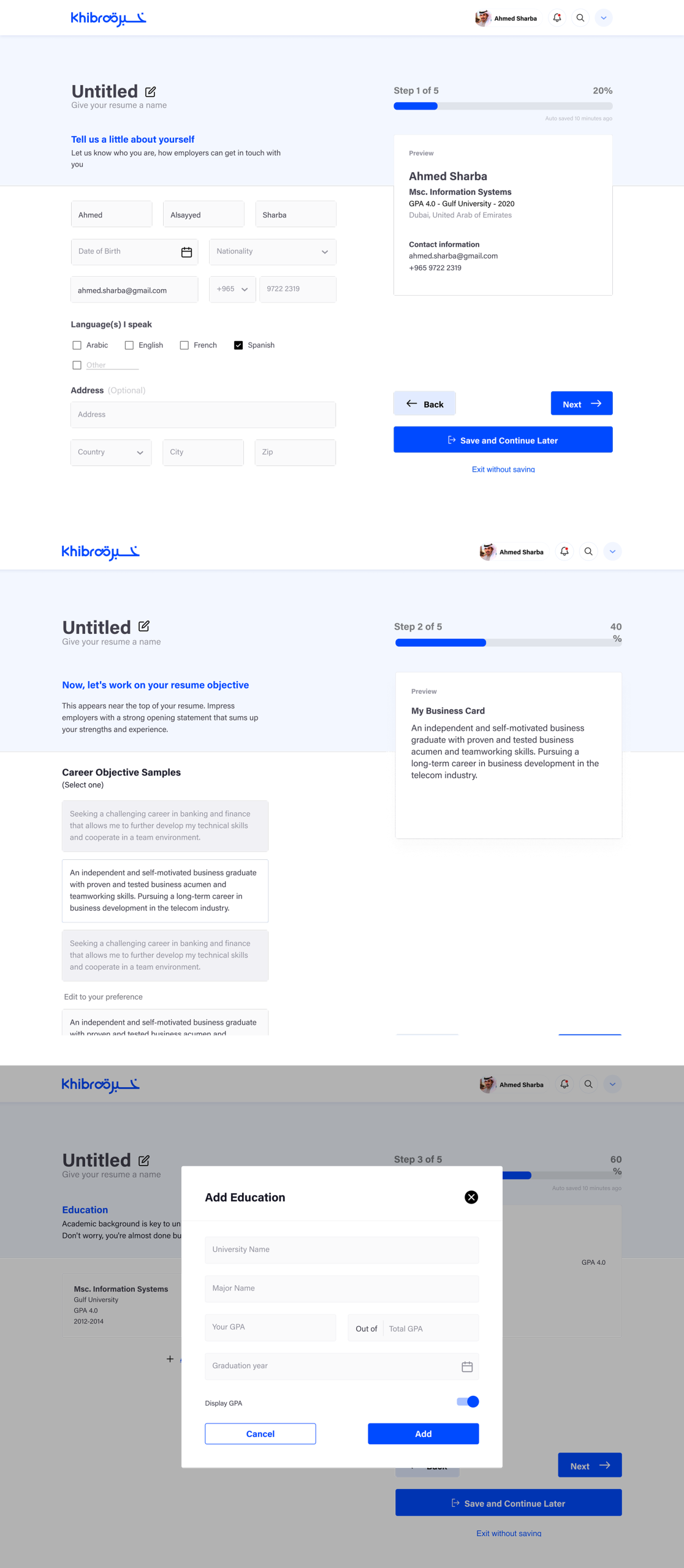
Redesigned Guided Experience
1.4 Iterations: When the MVP Backfired
Our first MVP was a single-page CV builder designed to move fast. It backfired.
What went wrong
- Only 58 percent of students completed it.
- Drop-off spiked at skills and experience.
- Students reported: “This feels long, I don’t know if I’m doing it right”
The fix
I redesigned the experience into a guided 5-step flow with:
- Progress indicators
- Cleaner grouping of fields
- Smart defaults based on university/major
- A real-time CV preview to build trust in the structured format
Impact
- Completion jumped to 82 percent
- Average time dropped to 13 minutes
- The structured data became reliable enough to power employer search
Market Impact & Business Validation
Students
- 900+ structured profiles created
- CV completion improved to 82 percent
- Clearer guidance on skills, roles, and next steps
Employers
- 100–120 employers using search tools
- Screening time reduced from hours to seconds
- Reliable comparison for the “middle 80 percent” of candidates
Universities
- 50+ universities digitised events and outcomes
- Consistent visibility into attendance and engagement
- Employer relationships became institutional, not individual
Business Validation
- $500K seed funding from Gulf Bank (2022)
- Acquisition of Majra (2023), consolidating early-career hiring in Kuwait and Bahrain.
- Early design foundations supported later features like employer partnerships and online career fairs.
1.5 Design System
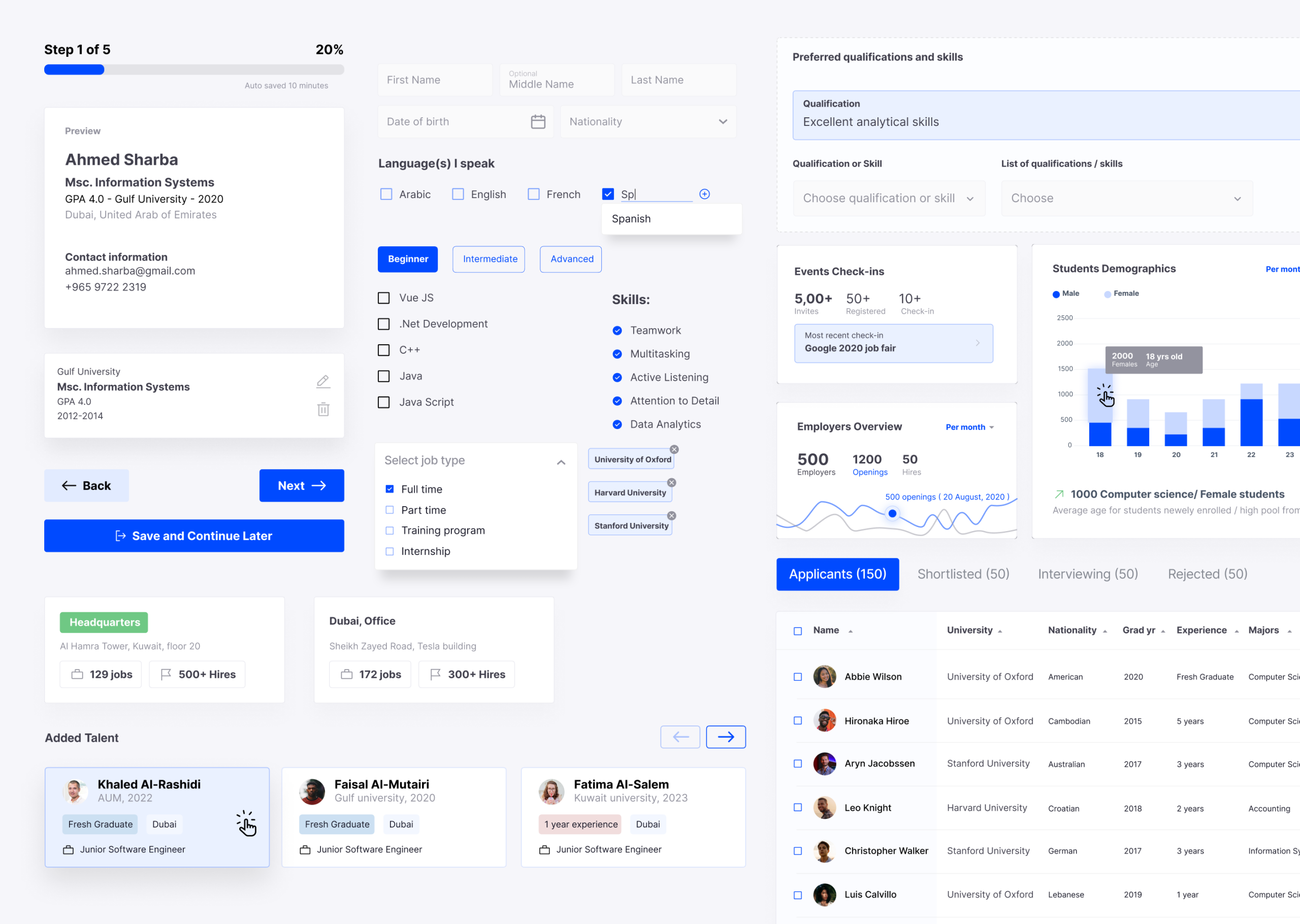
To support Students, Employers, and Universities in one platform, I built a unified design system that kept everything consistent and scalable.
- Standardised form fields, tables, filters, and cards so teams weren’t redesigning common patterns
- Created a component library that covered key interaction models: multi-step flows, previews, skill tags, filters, and data tables
- Defined clear rules for spacing, typography, and states, which helped clean up the UI and reduce decision fatigue
- Ensured components adapted well across dashboard views and dense data layouts
- Made the system flexible enough to expand into new features without rework
This system became the backbone of the platform and sped up design and development as the product grew.
Preparing the Platform for Scale
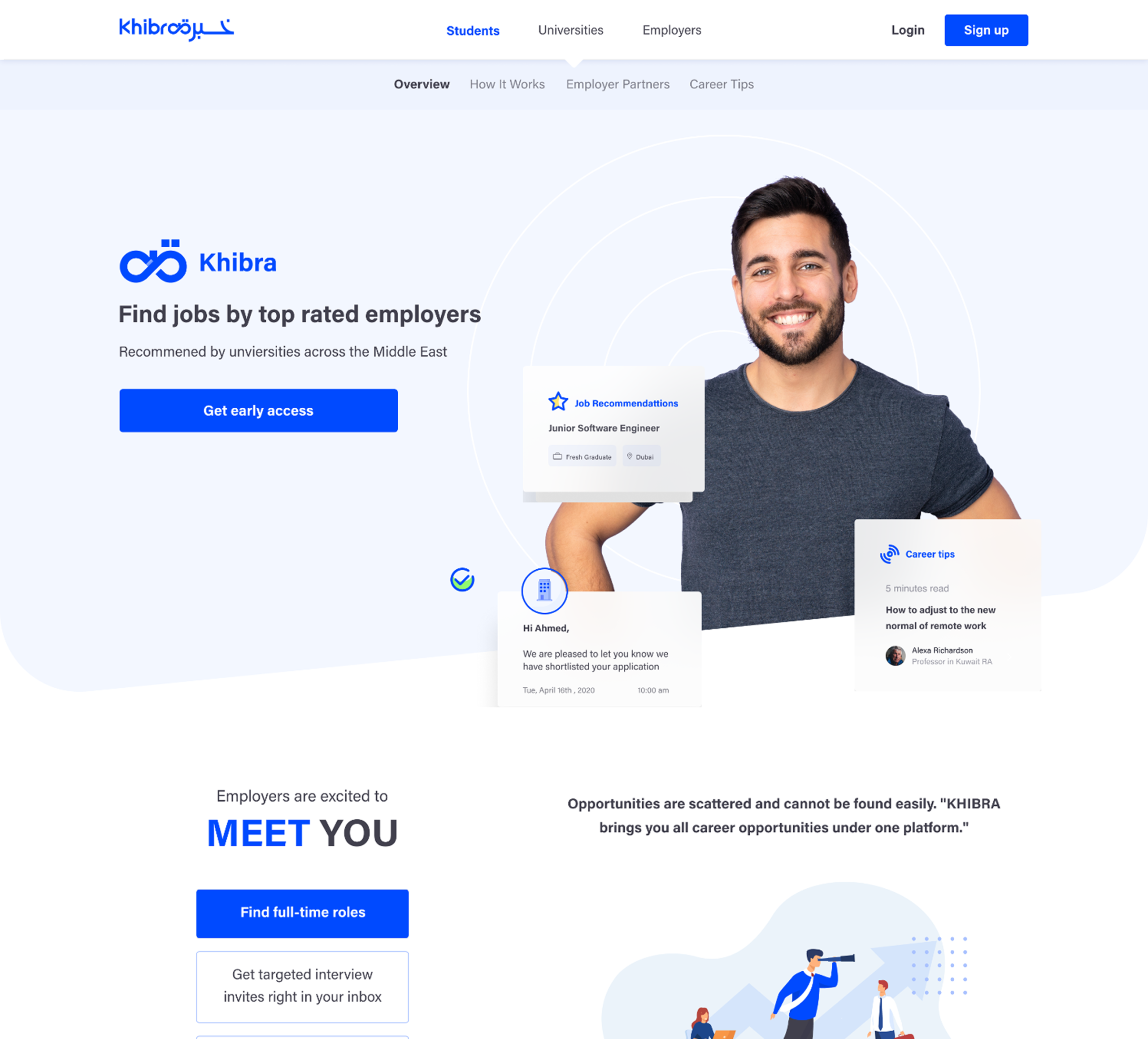
When The Taken Seat shifted internal teams to new ventures, I transitioned out of Khibra. Before that, I worked with our second designer to outline and document the next phase of the product, including early concepts for online career fairs, integrated video-calling workflows and website design. These ideas built directly on the structured data and IA foundations from Phase 1, making sure the team could continue scaling the platform without starting from scratch.
Online career fairs
Homepage design
Reflection
Founding design is mostly infrastructure work. The core decisions-how data is structured, how flows scale, how different sides of a marketplace interact-shape everything that comes later.
The biggest lesson was that friction is acceptable if the value is immediate. Students were willing to enter structured data once they could see the CV preview update in real time. This insight influenced every feature that followed.
If I were to improve one thing, it would be stronger instrumentation earlier. Capturing employer time-savings and student progression data from day one would have made later decisions faster and even more defensible.
Khibra
at a glance
Partnered with leading GCC universities
GUST, AUM, and other regional institutions used Khibra to support student career development.
Backed by major organisations
Khibra collaborated with Gulf Bank as part of youth-employment initiatives across Kuwait.